
Han Far Living · Lead-to-Payment Platform
Brand website · English interface
A lead-to-payment platform for a Singapore custom-blinds brand: quotes modeled by room and window, links for customers to review and pay a deposit, and a back office connecting orders with installation scheduling.
A lean, new company
This is Han Far Living, a Singapore blinds brand — a very lean team, just getting started. I built their official website first. Once it was done, I pitched the next step myself: turn lead capture, online payment, and referrals into one system. The reasoning was simple — the local competitors have been around for years; a small team breaks in by automating and moving fast. The endgame: let customers quote and order themselves, and the team just dispatches the install.
One chain, lead to payment
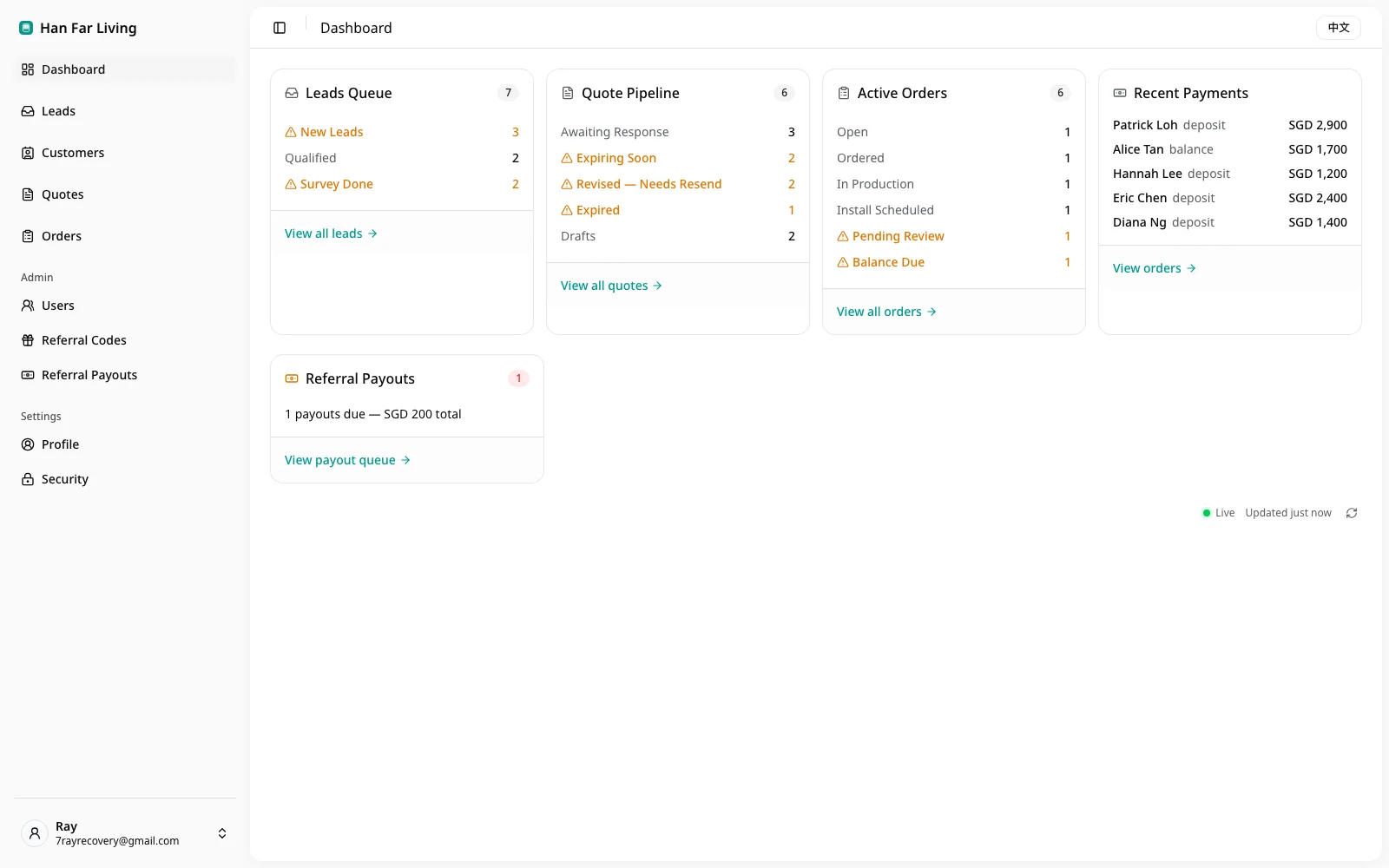
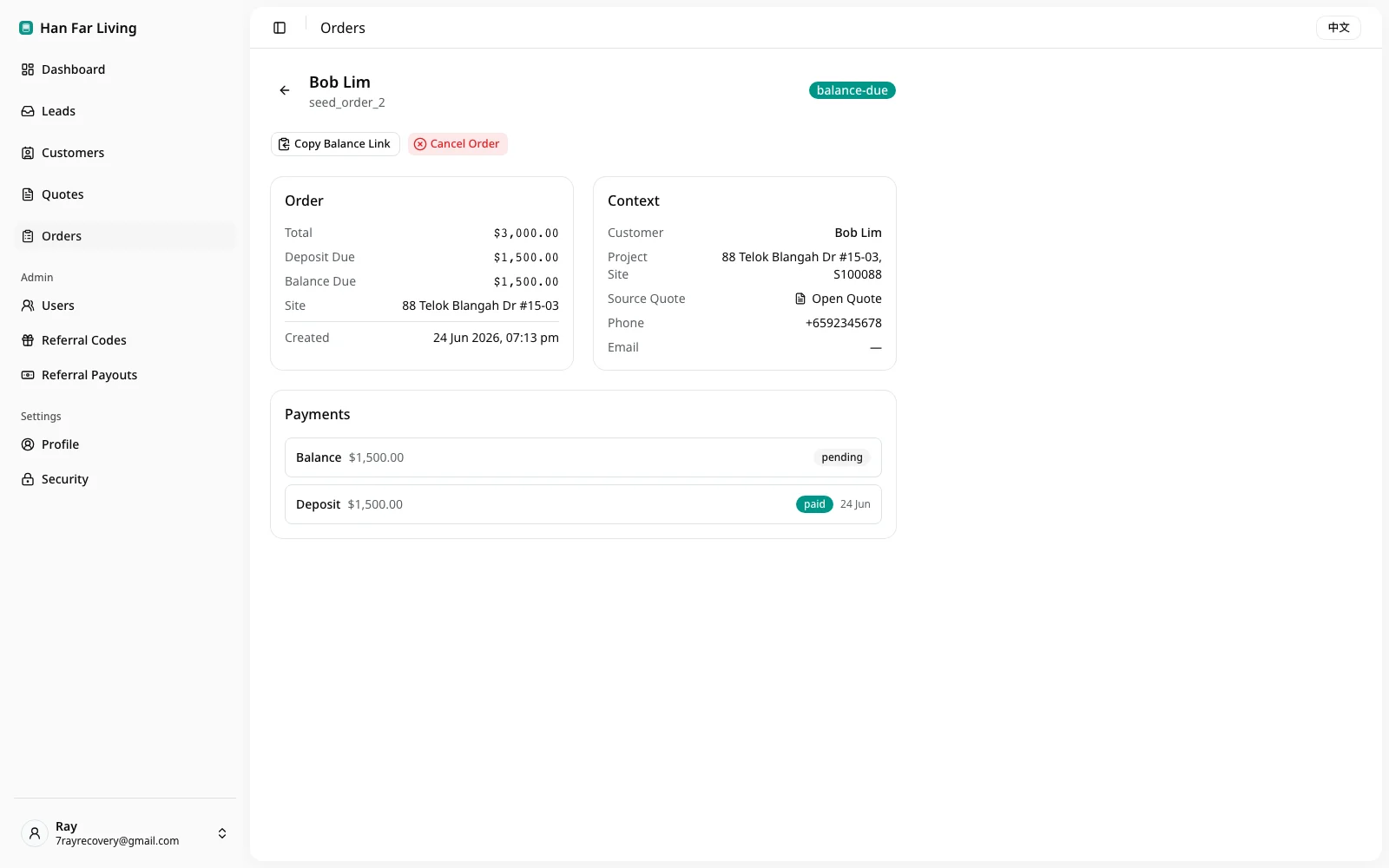
I implemented the workflow from lead to quote, deposit and balance, order and installation scheduling in one back office. The aim is to reduce copying and reconciliation across tools by keeping quotes, payments and orders together.
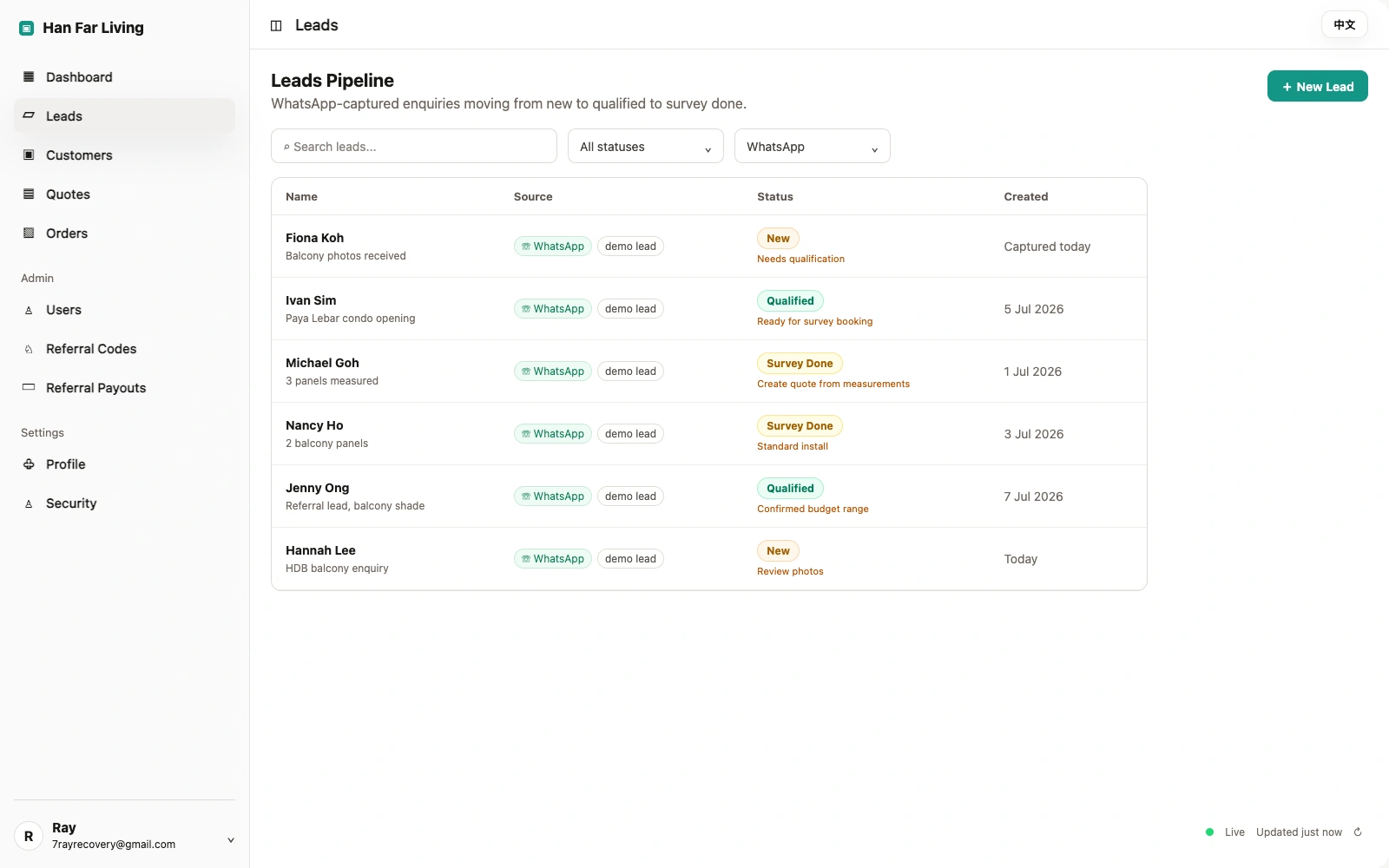
The back office supports recording WhatsApp enquiries as leads, progressing them from new to qualified to survey-done, then generating a quote.
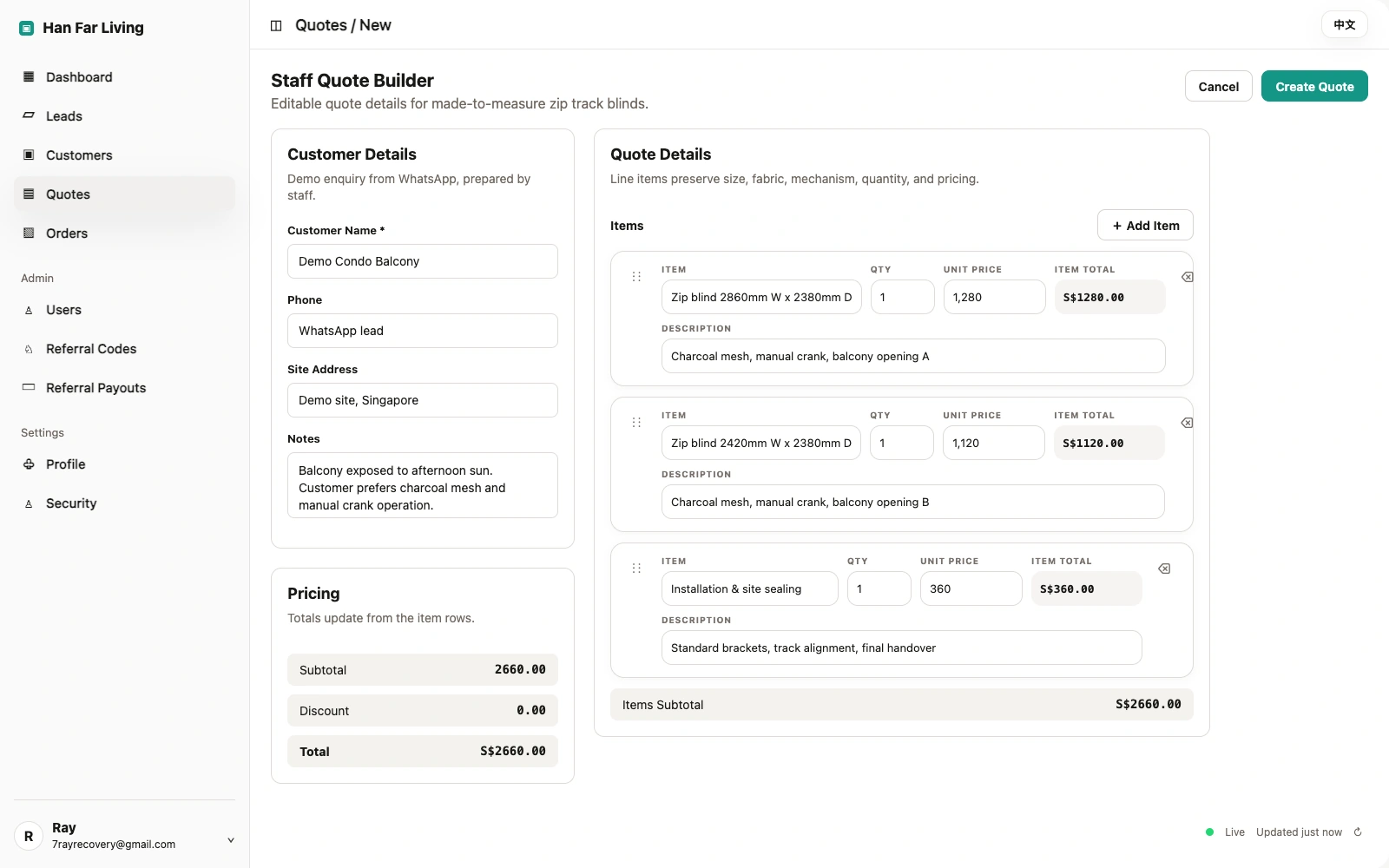
The quote is built the way blinds are sold
Blinds are made-to-measure, not shelf stock — a quote is configured room by room, window by window, by size and product type; both sides, the staff building it and the customer reviewing it, follow how they actually sell, nothing like an add-to-cart store.
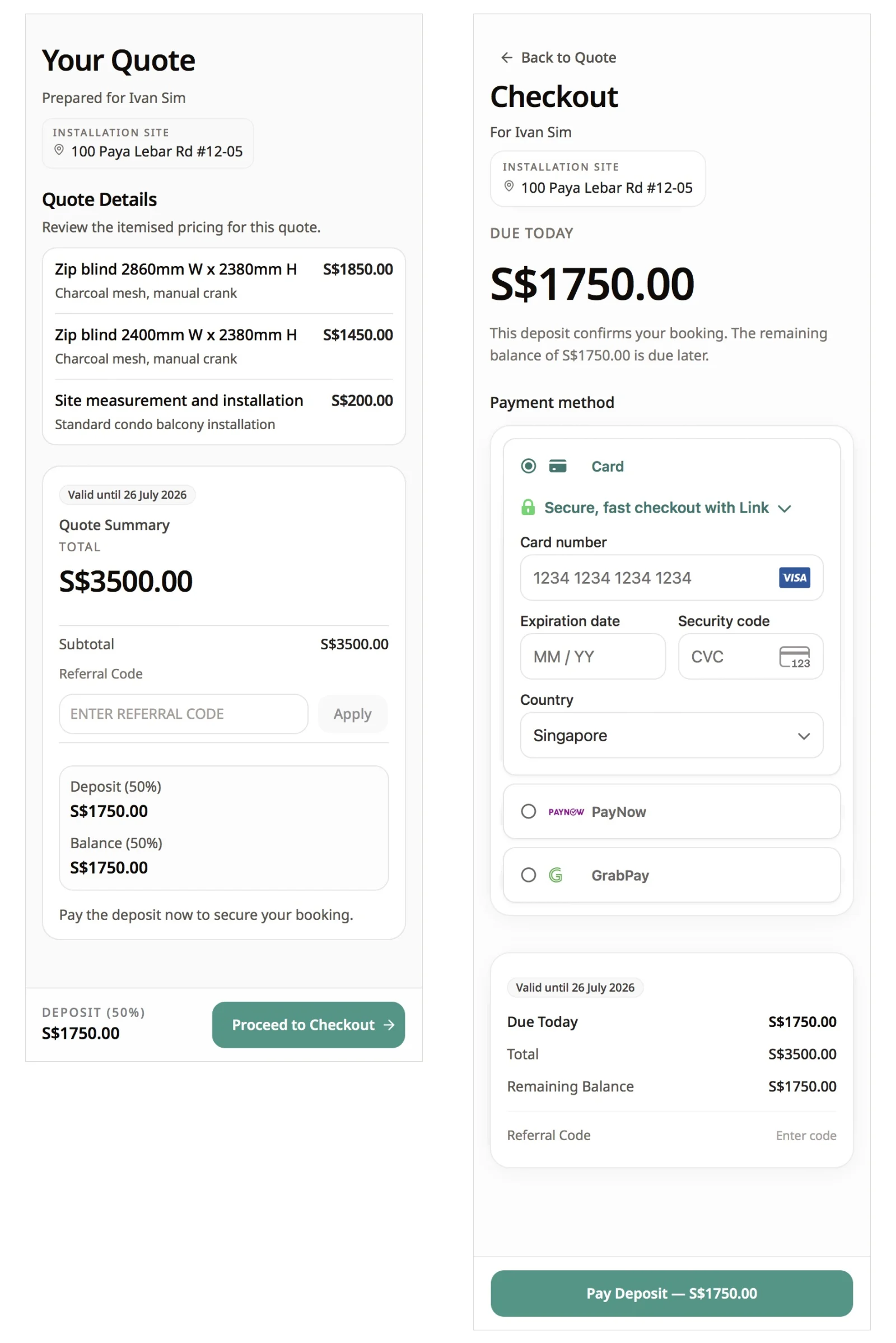
The customer needs no account: they open a quote link, see a locked priced snapshot, enter a referral code, and pay the deposit on-page (PayNow, card, and more); the balance settles back at the same link.
The money can’t be wrong
Deposit and balance are collected in two stages. On every payment the server re-derives the price and rejects anything that doesn’t match — it never trusts a number from the client. The webhook and the client-confirm path both converge on the same idempotent settlement, so a duplicate callback never double-books.
Quotes change, but leave a trace
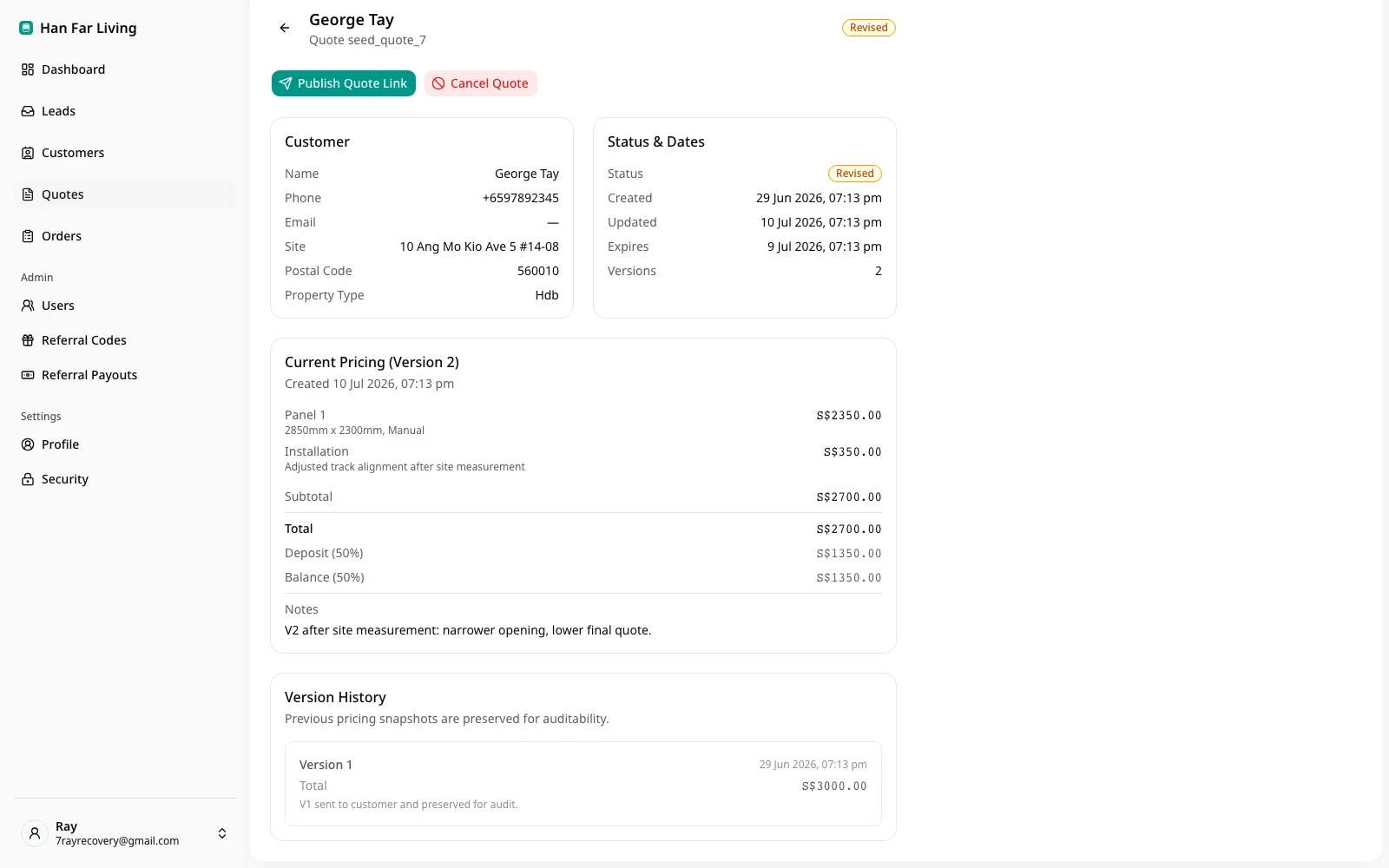
A quote can be revised — but a revision isn’t an overwrite. Each change appends a new version; the old one stays intact, and the version sent to the customer is pinned so a later edit can’t quietly replace it. Cancel and expire are terminal states — nothing is deleted.
What I built
Implemented quotes, payments, orders and referral payables with manual settlement. Quote versions, payment states and order records are linked so individual transactions can be reconciled.